AI Military Drones and Job Disruption: Who Controls the Future?
AI at the Edge: Military Drones, Disrupted Work, and the New Question of Human Control
As artificial intelligence moves from software tools into physical systems and everyday jobs, the central issue is no longer whether AI will change the world, but who remains accountable when it does.
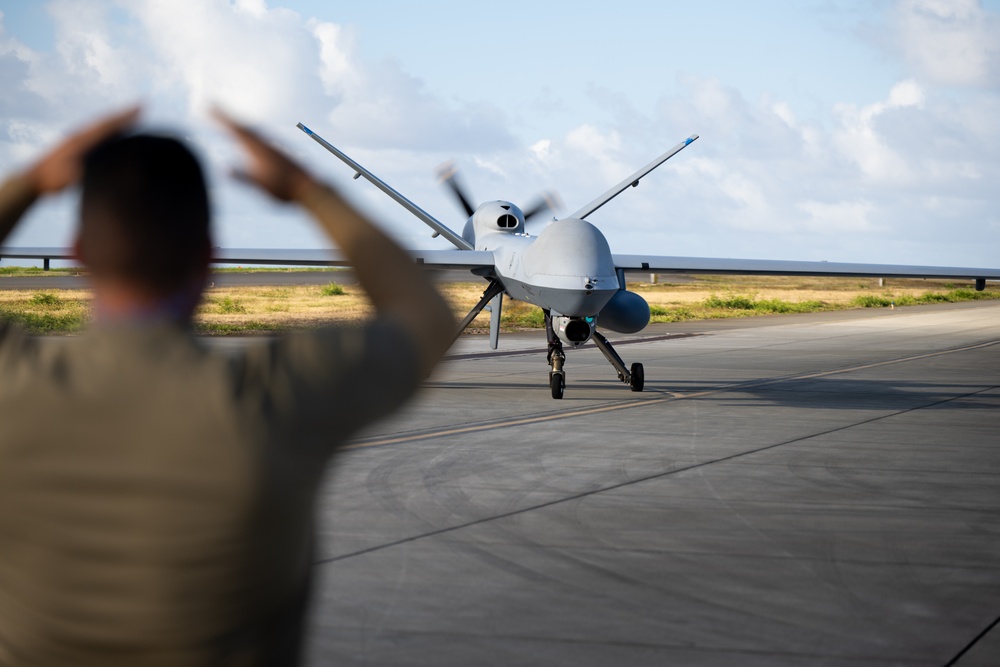
Artificial intelligence is advancing along two very different frontiers. On one, AI is being integrated into military drones and other weapon systems, sharpening questions about speed, targeting, human judgment, and accountability. On the other, the same broad family of technologies is reorganizing civilian work, automating tasks, changing hiring, and creating demand for new skills.
These stories are often discussed separately: one as a national-security debate and the other as an economic one. Yet they share a common tension. In both cases, institutions are delegating more analysis and action to machines while trying to decide which decisions must remain unmistakably human.
The drone debate is really an autonomy debate
Not every military drone is autonomous, and not every autonomous function is powered by artificial intelligence. A remotely piloted aircraft may depend on a human operator for navigation and weapons release. A more autonomous platform may use software to navigate, avoid obstacles, recognize patterns, coordinate with other systems, or select and engage a target after activation. The important distinction is not whether an aircraft has a pilot on board; it is what the system is permitted to decide and when a human can intervene.
That distinction matters because AI can compress the time between detection and action. Supporters argue that machine assistance can process sensor data faster, reduce operator workload, improve navigation in contested environments, and potentially make some uses of force more precise. Swarms of lower-cost systems may also distribute capability that once required a few expensive aircraft.
But speed is not the same as judgment. A model can misclassify an object, perform poorly outside its training conditions, inherit bias from data, or be manipulated by an adversary. In a civilian application, a bad prediction may deny a loan or produce a defective report. In combat, the same class of error can injure civilians, escalate a confrontation, or obscure who is responsible for a lethal decision.
Human control is the unresolved center
The International Committee of the Red Cross defines autonomous weapon systems as systems that, once activated, can select and apply force to targets without further human intervention. It has urged legally binding limits, including prohibitions on unpredictable systems and on systems designed or used to target people. The concern is not only technical reliability; it is the loss of human judgment over life-and-death decisions.
National policies do not all draw the line in the same place. The United States Department of Defense, for example, requires autonomous and semi-autonomous weapons to be designed so that commanders and operators can exercise appropriate levels of human judgment over the use of force. Its policy also calls for verification, validation, realistic testing, operator training, and consistency with responsible-AI principles.
International diplomacy remains unsettled. United Nations discussions have continued through the Convention on Certain Conventional Weapons, while the UN Secretary-General has called for legally binding prohibitions and restrictions on lethal autonomous weapons systems operating without human control. The difficult questions are practical as much as philosophical: How much time must a person have to review a recommendation? What information must the interface show? Can an operator meaningfully supervise dozens or hundreds of systems at once? What happens when communications are jammed?
A useful test: control before, during, and after
A credible governance framework should examine human control across the full life cycle. Before deployment, systems need rigorous testing under realistic and adversarial conditions. During use, operators need clear objectives, geographic and temporal limits, understandable interfaces, and a reliable ability to deactivate or redirect the system. After an incident, organizations need logs, audit trails, investigation procedures, and a chain of responsibility that cannot be outsourced to an algorithm.
The civilian front: disruption without a simple job-loss story
In the workplace, the loudest question is whether AI will eliminate jobs. The evidence points to a more complicated answer. The International Labour Organization’s 2025 global index estimates that one in four workers is in an occupation with some exposure to generative AI, while 3.3% of global employment falls in the highest exposure category. Its central conclusion is that transformation is more likely than wholesale replacement because most occupations still contain tasks that require human input.
The International Monetary Fund has estimated that almost 40% of global employment is exposed to AI, with exposure rising to roughly 60% in advanced economies. Exposure is not the same as elimination: in some roles AI may complement workers and raise productivity; in others it may reduce labor demand, wages, or hiring.
The World Economic Forum’s Future of Jobs Report 2025, based on the expectations of more than 1,000 employers, projects that broad economic and technological forces could create 170 million jobs and displace 92 million by 2030, a net increase of 78 million. Those numbers cover multiple macrotrends, not AI alone, and they should be read as a scenario rather than a precise forecast. Still, they capture the scale of churn employers expect.
Which workers feel the pressure first?
Generative AI is especially capable at drafting, summarizing, translation, coding assistance, customer support, document review, and other language-heavy tasks. That puts clerical and administrative work under immediate pressure, but it also reaches into professional roles once considered relatively insulated from automation.
The most likely near-term pattern is task unbundling. Some responsibilities are automated, others become faster, and remaining work shifts toward verification, relationship management, exception handling, domain judgment, and accountability. A job title may survive while the content of the job changes substantially. Entry-level roles deserve particular attention because routine assignments have traditionally served as training grounds for more advanced work.
The distribution of benefits will depend on who owns the technology, who receives training, and whether productivity gains are shared. Firms that treat AI as a shortcut to head-count reduction may capture immediate savings but lose institutional knowledge and future talent pipelines. Firms that redesign work deliberately can use AI to expand capacity while preserving review, apprenticeship, and responsibility.
One technology, one governance lesson
Military autonomy and workplace automation are not morally equivalent. The stakes of a lethal decision are categorically different from the stakes of a business process. But the governance lesson travels across both domains: accountability must remain attached to people and institutions, even when machines perform more of the analysis or execution.
Good policy therefore begins with decisions, not devices. Which decisions may be delegated? Which require human authorization? What evidence must the system provide? How can a person contest or override an output? Who carries responsibility when the system fails? And what records allow independent review?
For governments, that means clearer limits on autonomous weapons, serious testing standards, incident reporting, procurement rules, and international negotiation. For employers, it means worker consultation, impact assessments, retraining, transparent performance monitoring, and meaningful appeal processes when algorithms shape hiring, scheduling, evaluation, or dismissal.
What comes next
Public curiosity is rising because AI is becoming consequential in places where errors cannot be dismissed as software glitches. A drone that interprets the battlefield and a workplace system that reallocates human labor are both examples of software acquiring operational power.
The next phase of the AI debate should be less fascinated with whether machines appear intelligent and more focused on whether institutions remain responsible. Innovation can move quickly. Legitimacy, safety, and public trust depend on keeping human judgment visible, capable, and accountable wherever the consequences are greatest.
Sources and further reading
- International Committee of the Red Cross — Autonomous Weapons
- ICRC — Autonomous Weapon Systems and International Humanitarian Law
- U.S. Department of Defense — Directive 3000.09
- UN Office for Disarmament Affairs — 2025 LAWS documents
- International Labour Organization — Generative AI and Jobs: 2025 Update
- International Monetary Fund — AI and the Global Economy
- World Economic Forum — Future of Jobs Report 2025


Comments
Post a Comment